
Why Eczema Flares in the Cape Winter — and How to Manage It
If your eczema settles in summer and returns the moment the cold weather arrives, you are not imagining it. Winter is the season I see the most eczema flares in my practice, and the pattern is remarkably consistent: skin that was comfortable in March becomes dry, tight, and intensely itchy by June.
The good news is that winter eczema is predictable, and predictable problems can be planned for. With a few changes to your routine — and the right treatment when you need it — most patients can get through a Cape winter with their skin under control.
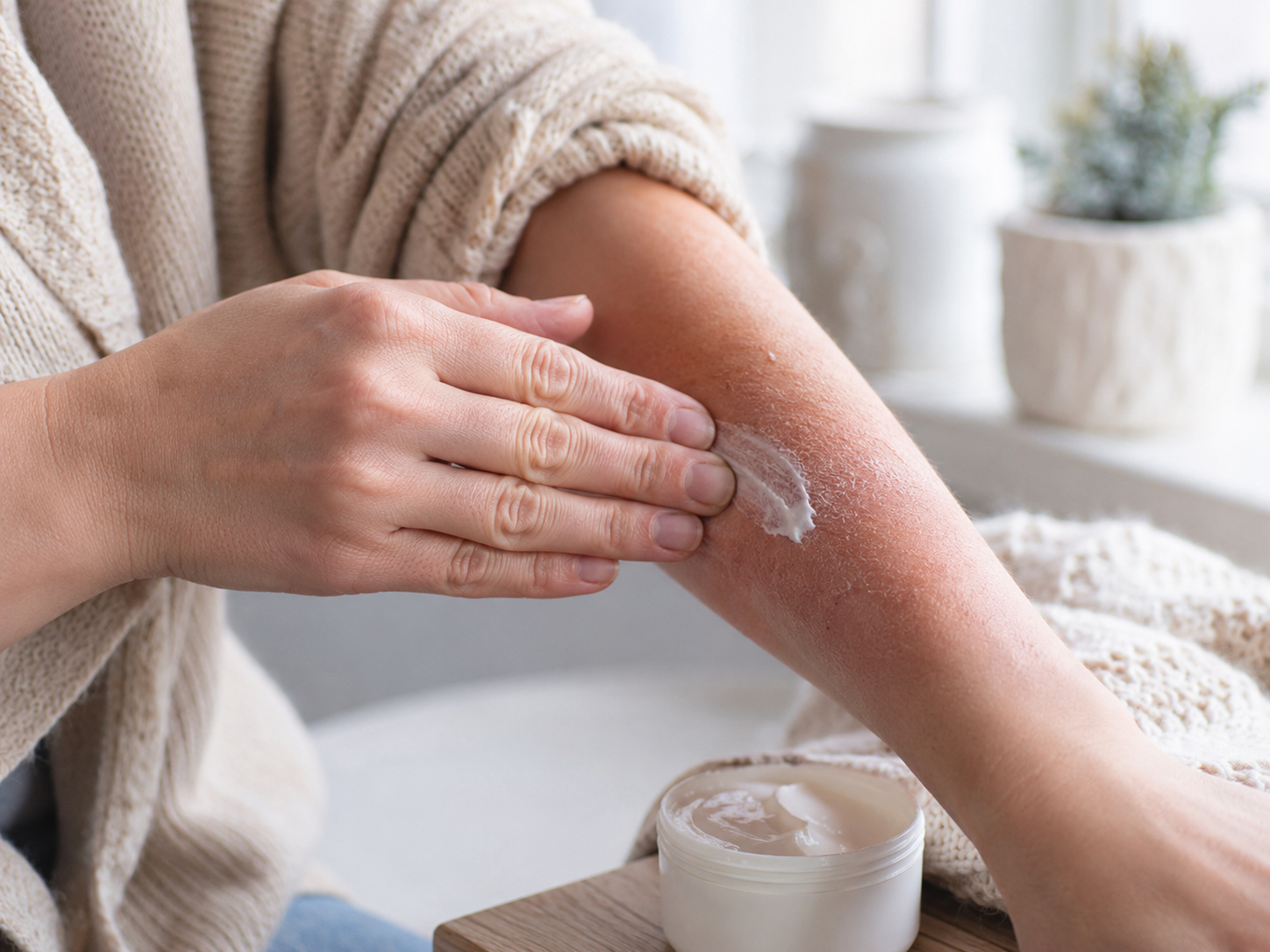
Person applying moisturiser to dry winter skin
Why winter is hard on eczema-prone skin
Eczema is, at its core, a problem of the skin barrier. In eczema-prone skin, that barrier is weaker than it should be, so moisture escapes easily and irritants get in. Anything that dries the skin further tends to trigger the itch-and-inflammation cycle. Winter does exactly that, from several directions at once.
The air is drier. Cold winter air holds less moisture, and that low humidity pulls water out of the skin. Transepidermal water loss — the slow evaporation of moisture through the skin barrier — speeds up, leaving the surface dry and cracked.
Indoor heating makes it worse. Heaters and closed-up rooms create a warm, dry indoor environment that dries the skin even further. Many patients flare not because of the cold outside, but because of the dry heat inside.
Heavier clothing rubs and irritates. Wool and rough synthetic fabrics worn directly against the skin are a common winter trigger, particularly on the neck, wrists, and inner arms.
There is also less sunlight. Natural ultraviolet light has a mild calming effect on the immune activity that drives eczema, and shorter, greyer winter days mean less of it. For some patients this is a real, if smaller, part of the winter pattern.
In Cape Town specifically, the cold, wet, windy winter combined with warm indoor heating creates exactly the swing in humidity that eczema-prone skin handles worst.
Practical steps that make a difference
Most winter flares can be softened considerably with consistent skin care. These are the measures I recommend most often.
Moisturise more often, and use something heavier. Emollients are the foundation of all eczema care, and winter is when they matter most. A light summer lotion is often not enough now — a thicker cream or an ointment-based emollient holds moisture in far better. Apply it generously at least twice a day, and reapply to your hands whenever they feel dry.
Use the "soak and seal" method. Within a few minutes of bathing, while your skin is still slightly damp, apply your moisturiser. This traps the water your skin has just absorbed rather than letting it evaporate in the dry air.
Keep showers short, lukewarm, and gentle. Warm rather than hot, kept to around ten minutes, and using a non-soap cleanser or plain moisturiser as soap substitute. Ordinary soap is alkaline and strips the skin; a soap substitute cleans without the same drying effect.
Soften the indoor air. If you use a heater in a closed room, a bowl of water nearby or a simple humidifier reduces how dry the air becomes. You do not need expensive equipment — you need to avoid sitting in hot, bone-dry air for hours.
Choose fabrics with care. Wear soft cotton next to the skin and keep wool and scratchy synthetics as outer layers. Wash new clothing before wearing it, and use a fragrance-free laundry detergent.
Look after your hands. Winter hand eczema is extremely common, made worse by frequent washing, hand sanitiser, and cold wind. Moisturise after every wash, and wear gloves for cold weather and for wet work such as dishes.
Do not stop your maintenance treatment. If your dermatologist has prescribed a maintenance routine, winter is not the time to ease off. Staying ahead of a flare is far easier than rescuing one.
When it is more than dry skin
Good home care goes a long way, but there is a point where it is not enough — and recognising that point matters, because poorly controlled eczema can lead to broken skin and infection.
It is worth arranging to see a dermatologist if your eczema is not settling with pharmacy moisturisers and mild steroid creams, if you are reaching for topical steroids very frequently, if the itch is disturbing your sleep or affecting your work, or if you are getting repeated skin infections. The same applies if you suspect something you are in contact with is making things worse — a new product, a metal, a fragrance — in which case patch testing can identify the specific allergen so it can be avoided.
A specialist consultation lets us confirm the diagnosis, rule out conditions that mimic eczema, and match your treatment to the severity of your skin. Beyond emollients and topical steroids, there are steroid-free topical options for delicate areas, and for moderate-to-severe eczema there are modern systemic and biologic treatments that have changed what is achievable for patients who previously felt they had run out of options. You can read more about the full range on our specialist eczema treatment page.
A calmer winter for your skin
Winter eczema is common, but it is not something you simply have to endure each year. Most flares respond well to consistent skin-barrier care and, where needed, a treatment plan tailored to your skin. The aim is not just to settle this flare, but to keep your skin comfortable through the whole season.
If your eczema flares every winter and you would like a clear, personalised plan to manage it, I would be glad to help.
Book a consultation with Dr Jean Louw at Panorama Dermatology Clinic. We are at 46 Hennie Winterbach Street in Panorama, with easy access from the N1 and Voortrekker Road, and we welcome patients from all over Cape Town and the northern suburbs — including Durbanville, Bellville, Brackenfell, Parow, and Goodwood.
Call 021 911 5470 or WhatsApp 079 321 1973 to arrange your appointment.
