
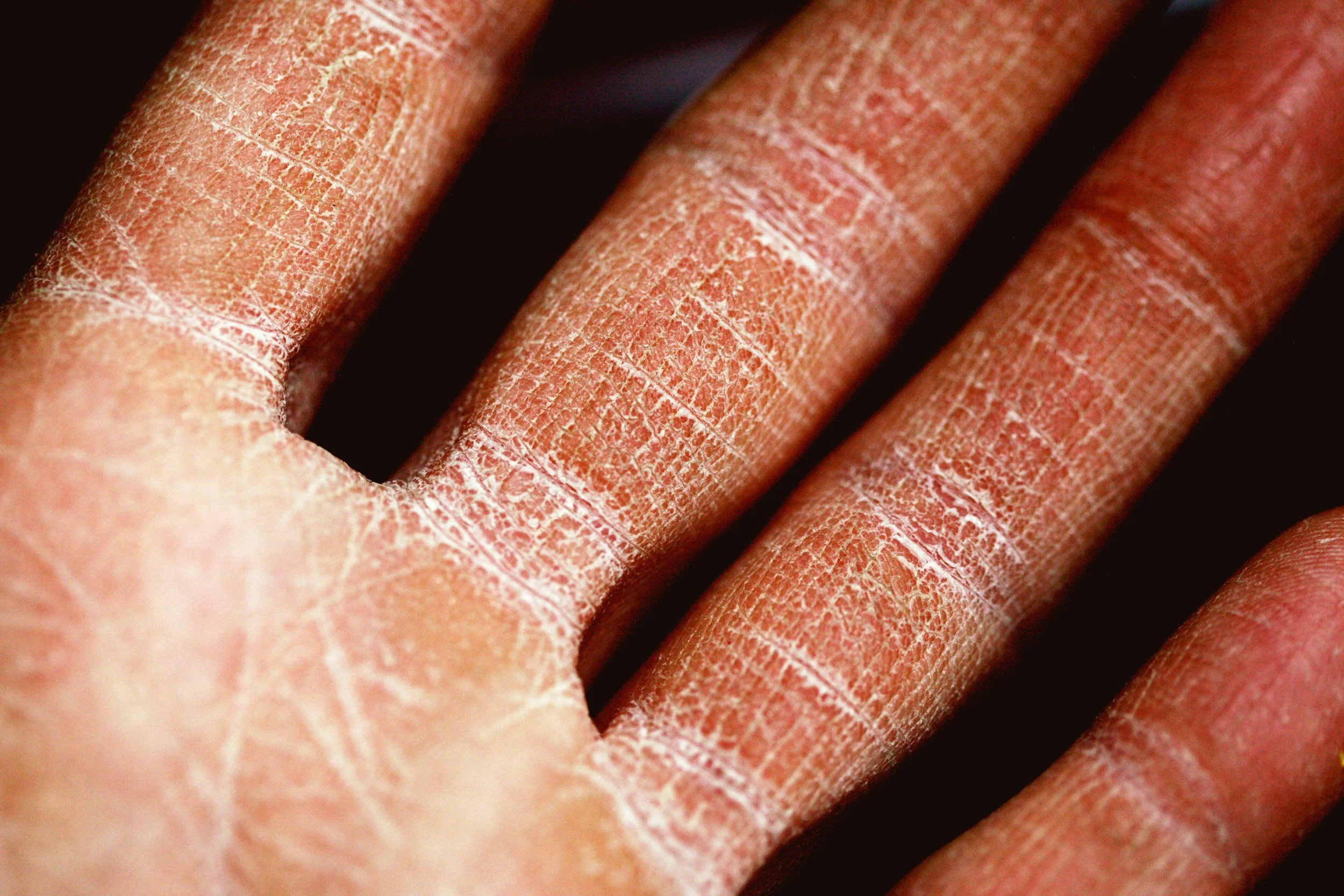
Eczema Treatment in Cape Town
Eczema is one of the most common skin conditions we treat at Panorama Dermatology Clinic. It is a chronic inflammatory skin condition that causes dry, itchy, and irritated skin — and for many patients, it significantly affects quality of life, sleep, and daily functioning.
Dr. Jean Louw provides specialist eczema treatment tailored to your skin type, trigger profile, and severity. As a board-certified dermatologist with over 25 years of experience, he takes a systematic, evidence-based approach to controlling flare-ups, reducing inflammation, and achieving long-term remission.
What Is Eczema?
Eczema (also called atopic dermatitis) is a chronic condition in which the skin barrier is impaired, allowing moisture to escape and irritants or allergens to penetrate more easily. This triggers an immune response that causes inflammation, itching, and redness.
Eczema is not contagious and is not caused by poor hygiene. It has a strong genetic component — patients with eczema often have a family history of eczema, asthma, or hay fever, a combination known as the atopic triad.
Common symptoms include:
Intense itching — often worse at night, disrupting sleep
Dry, sensitive skin — with a tendency to crack or flake
Red to brownish-grey patches — particularly on the hands, feet, ankles, wrists, neck, upper chest, eyelids, and the inner creases of the elbows and knees
Small, raised bumps — which may weep fluid and crust over when scratched
Thickened, scaly skin — in areas of chronic scratching (lichenification)
In Cape Town's variable climate — with cold, dry winters and warm, humid summers — eczema flares are common. House dust mite exposure, a significant trigger, is also particularly relevant in the Western Cape.
If your skin worsens in the colder months, read more about why eczema flares in the Cape winter and how to manage it.
Types of Eczema We Treat
At our Panorama clinic, Dr. Louw treats the full spectrum of eczema presentations:
Atopic dermatitis — the most common form, strongly associated with a personal or family history of allergies, asthma, or hay fever. Can begin in infancy and persist into adulthood.
Contact dermatitis — triggered by direct skin contact with an irritant (irritant contact dermatitis) or an allergen (allergic contact dermatitis). Patch testing is used to identify the specific cause.
Dyshidrotic eczema — affects the hands and feet, causing intensely itchy blisters along the sides of the fingers, palms, and soles.
Seborrhoeic dermatitis — affects oily areas such as the scalp, face, and chest. Linked to a yeast called Malassezia and commonly presents as dandruff or facial redness and scaling.
Nummular eczema — coin-shaped patches of irritated skin, often triggered by dry skin or insect bites.
Eczema in children — a common presentation in our clinic. Eczema affects up to 20% of children and requires careful, age-appropriate management to minimise discomfort and prevent secondary infection.
Our Approach to Eczema Treatment
Effective eczema management requires a personalised treatment plan based on your eczema type, severity, trigger profile, and medical history. Dr. Louw will assess your skin thoroughly during your consultation and develop a step-by-step plan that may include one or more of the following:
Emollients and Skin Barrier Repair
The foundation of all eczema treatment is restoring and maintaining the skin barrier. Regular, generous application of emollients (moisturisers) reduces water loss, decreases sensitivity to triggers, and reduces the frequency of flare-ups. Dr. Louw will advise on the most appropriate emollient for your skin type and how to use it correctly.
Topical Corticosteroids
Topical corticosteroids remain the first-line treatment for eczema flares. They reduce inflammation and itching effectively when used correctly. Dr. Louw prescribes the appropriate potency for the affected area and patient age, with clear guidance on safe usage to avoid side effects from overuse.
Topical Calcineurin Inhibitors
For patients who require long-term treatment or who have eczema in sensitive areas such as the face and eyelids, topical calcineurin inhibitors such as pimecrolimus (Elidel) offer a steroid-free alternative that is safe for prolonged use.
Trigger Identification and Avoidance
Identifying and avoiding personal triggers is a critical part of long-term eczema control. Common triggers include house dust mites, pet dander, certain soaps and detergents, sweat, stress, and specific foods in young children. Where allergic contact dermatitis is suspected, patch testing can identify the specific allergen responsible.
Oral Medications
For moderate to severe eczema that does not respond adequately to topical treatment, oral medications may be required. These include short courses of oral corticosteroids for acute severe flares, oral antihistamines to help manage itch and improve sleep, and oral antibiotics when secondary bacterial infection is present.
Advanced Systemic Treatments
For patients with severe, refractory eczema, Dr. Louw can initiate or co-manage systemic immunosuppressive therapy. Options include cyclosporin, methotrexate, and azathioprine. These require careful monitoring but can provide significant relief for patients with difficult-to-control disease.
For moderate-to-severe atopic dermatitis that does not respond to conventional treatment, Dr Louw can also assess suitability for dupilumab (Dupixent) — a targeted biologic therapy that blocks the IL-4 and IL-13 inflammatory pathways central to eczema. Unlike older systemic immunosuppressants it does not require routine blood monitoring, and many patients see meaningful, sustained improvement in itch and skin clearance.
When Should You See a Dermatologist for Eczema?
Many eczema patients manage with over-the-counter moisturisers and mild steroid creams for years before seeking specialist help. Consider booking a consultation if:
Your eczema is not adequately controlled with pharmacy products
You are using topical steroids frequently and are concerned about long-term side effects
Your eczema is affecting your sleep, work, or quality of life
You are developing frequent skin infections (a sign of poorly controlled eczema)
You suspect a contact allergy may be contributing to your skin condition
Your child has persistent or severe eczema that is affecting their sleep or development
You would like to explore newer or systemic treatment options
Eczema Treatment for Patients Across Cape Town's Northern Suburbs
Panorama Dermatology Clinic is conveniently located at 46 Hennie Winterbach Street in Panorama, with easy access from the N1 and Voortrekker Road. We welcome eczema patients from Durbanville, Bellville, Brackenfell, Kraaifontein, Parow, Goodwood, Tygerberg, and the greater Cape Town area.
Frequently Asked Questions About Eczema
Q: Is eczema curable? Eczema is a chronic condition without a permanent cure, but it can be very well controlled with the right treatment plan. Many children improve significantly as they get older, and some outgrow it entirely. In adults, the goal is long-term remission with minimal flares.
Q: Is eczema the same as dermatitis? The terms are often used interchangeably. "Dermatitis" simply means inflammation of the skin, while "eczema" typically refers to atopic dermatitis specifically. In practice, dermatologists use both terms, and the distinction matters less than identifying the specific type and trigger.
Q: Can eczema be triggered by food? In young children, certain foods — particularly cow's milk, eggs, peanuts, and wheat — can trigger or worsen eczema. In adults, food triggers are less common but do occur. Dr. Louw can advise on whether allergy testing is appropriate in your case.
Q: Are topical steroids safe for long-term use? Topical steroids are safe when used correctly and at the appropriate potency for the affected area. Overuse — particularly of potent steroids on sensitive areas like the face — can cause skin thinning and other side effects. Dr. Louw will prescribe the least potent steroid that controls your eczema effectively, with clear guidance on how and when to use it.
Q: What is the difference between eczema and psoriasis? Both conditions cause red, scaly skin and are often confused. Eczema tends to affect the inner creases of joints, is intensely itchy, and is associated with allergies and asthma. Psoriasis typically affects the outer surfaces of joints, the scalp, and lower back, and produces thicker, more silvery-white scale. A dermatologist can distinguish between the two with a clinical examination, and occasionally a skin biopsy.
Q: Can stress cause eczema flares? Yes. Psychological stress is a well-recognised trigger for eczema flares, likely through its effect on the immune system and the itch-scratch cycle. Stress management techniques can form a useful part of a comprehensive eczema management plan.
Ready to get your eczema under control?
Book a consultation with Dr. Jean Louw at Panorama Dermatology Clinic.