
Specialist Skin Surgery by Dr Jean Louw
Whether you need a suspicious mole checked, a skin cancer removed, or a straightforward biopsy for an unclear rash, our surgical dermatology services are here to help. Dr Jean Louw personally performs every procedure at Panorama Dermatology Clinic, bringing over 25 years of specialist experience and internationally recognised qualifications (FC Derm SA, MMed Dermatology, UK CCST) to your care.
Our surgical services cover the full spectrum of dermatological procedures, from routine skin checks and cryotherapy to the excision of skin cancers and complex lesions. Every procedure is carried out under local anaesthetic in our Panorama rooms — conveniently located for patients from Durbanville, Bellville, Brackenfell, Parow, Goodwood, and the wider northern suburbs of Cape Town.
If you have a mole that has changed in size, shape, or colour, or a skin lesion that is new, growing, or not healing, do not delay — early assessment by a specialist dermatologist gives you the best outcome.

Surgical Dermatology
-
General Skin Surgery
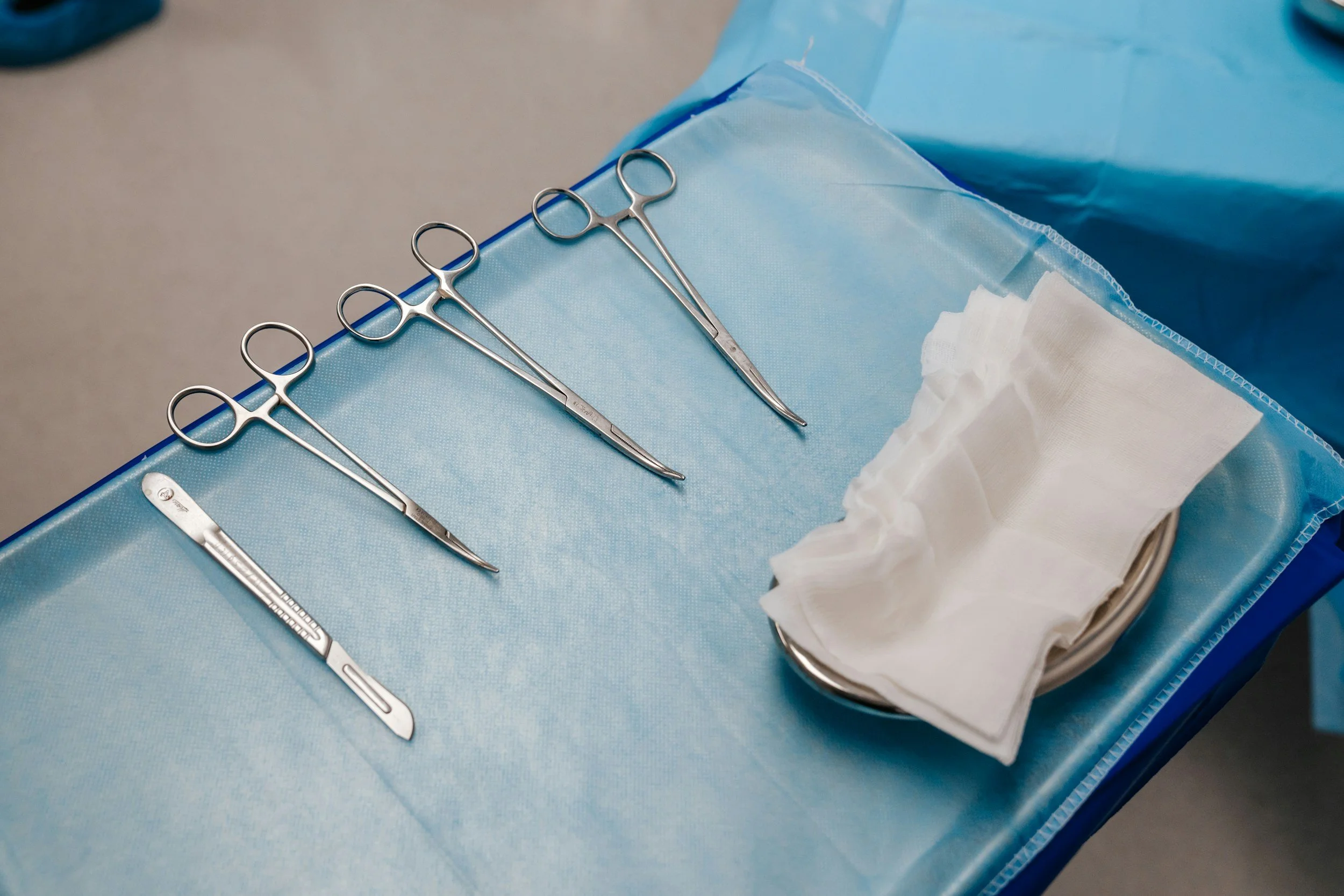
When a skin lesion needs to be removed — whether for cancer treatment or diagnostic certainty — ellipse excision is the most common technique Dr Louw uses. Here is how it works and what to expect.
Skin surgery is a critical aspect of dermatology, primarily performed to remove cancerous skin lesions, such as basal cell carcinoma, squamous cell carcinoma, and melanoma. Among the various surgical techniques, ellipse excisions, also known as wedge excisions, are widely used to ensure complete removal of malignant tissue while minimising scarring and preserving skin function.
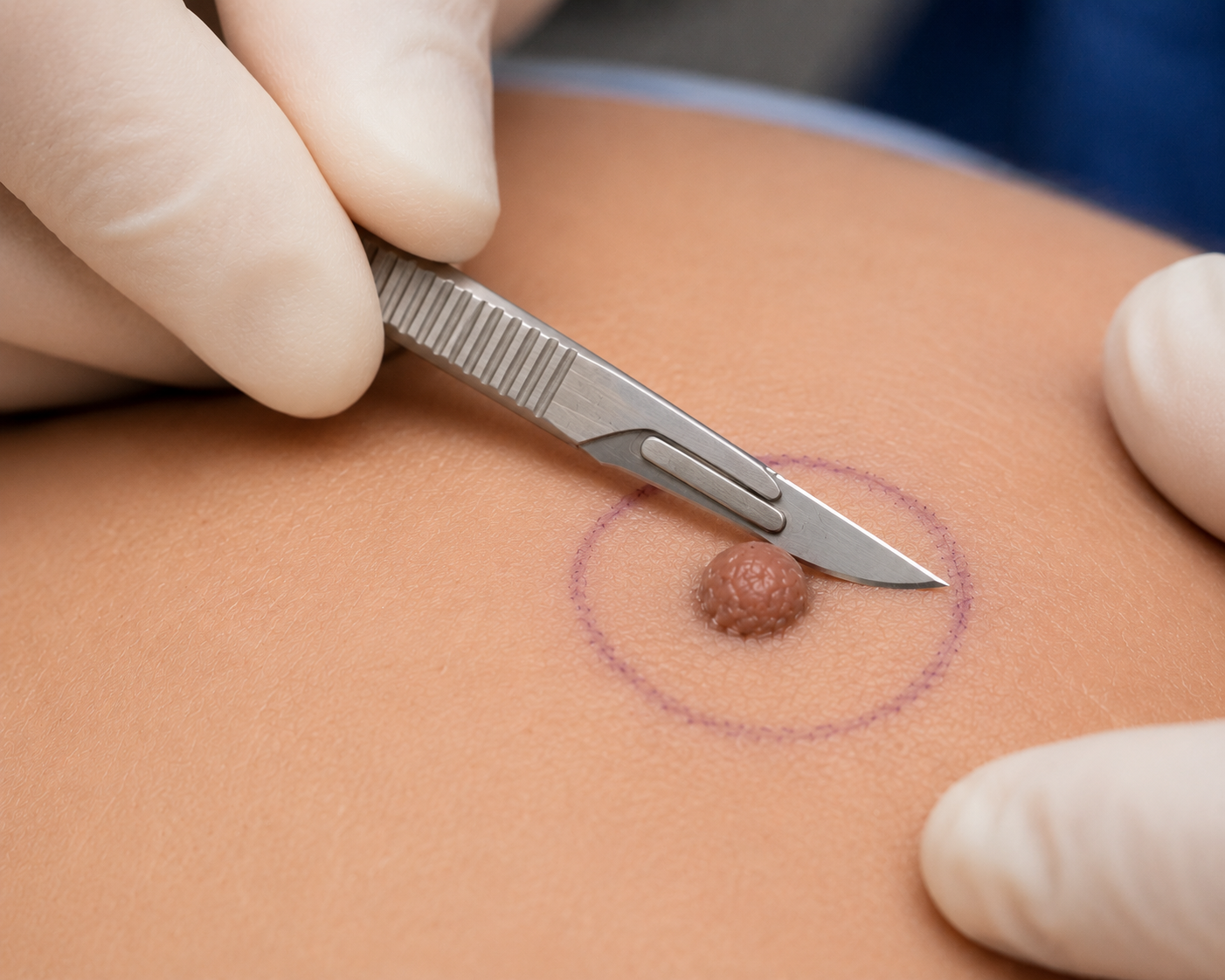
Ellipse excisions involve removing the lesion along with a margin of healthy skin to ensure that all cancerous cells are excised. The shape of the excision is elliptical or wedge-like, which allows for easier closure of the wound and reduces the risk of tension on the skin edges, promoting better healing. The procedure begins with marking the area around the lesion, followed by injecting local anaesthesia to numb the skin. The dermatologist then uses a scalpel to cut along the marked lines, creating an elliptical incision. The tissue is carefully removed, and the specimen is sent to a laboratory for histopathological examination to confirm that the margins are clear of cancer cells.
Ellipse excisions are advantageous because they provide a balance between adequately removing the lesion and minimising cosmetic concerns. The linear closure typically results in a less noticeable scar compared to other excision types, making this method a preferred choice for removing cancerous skin lesions in cosmetically sensitive areas.
-
Skin Biopsy
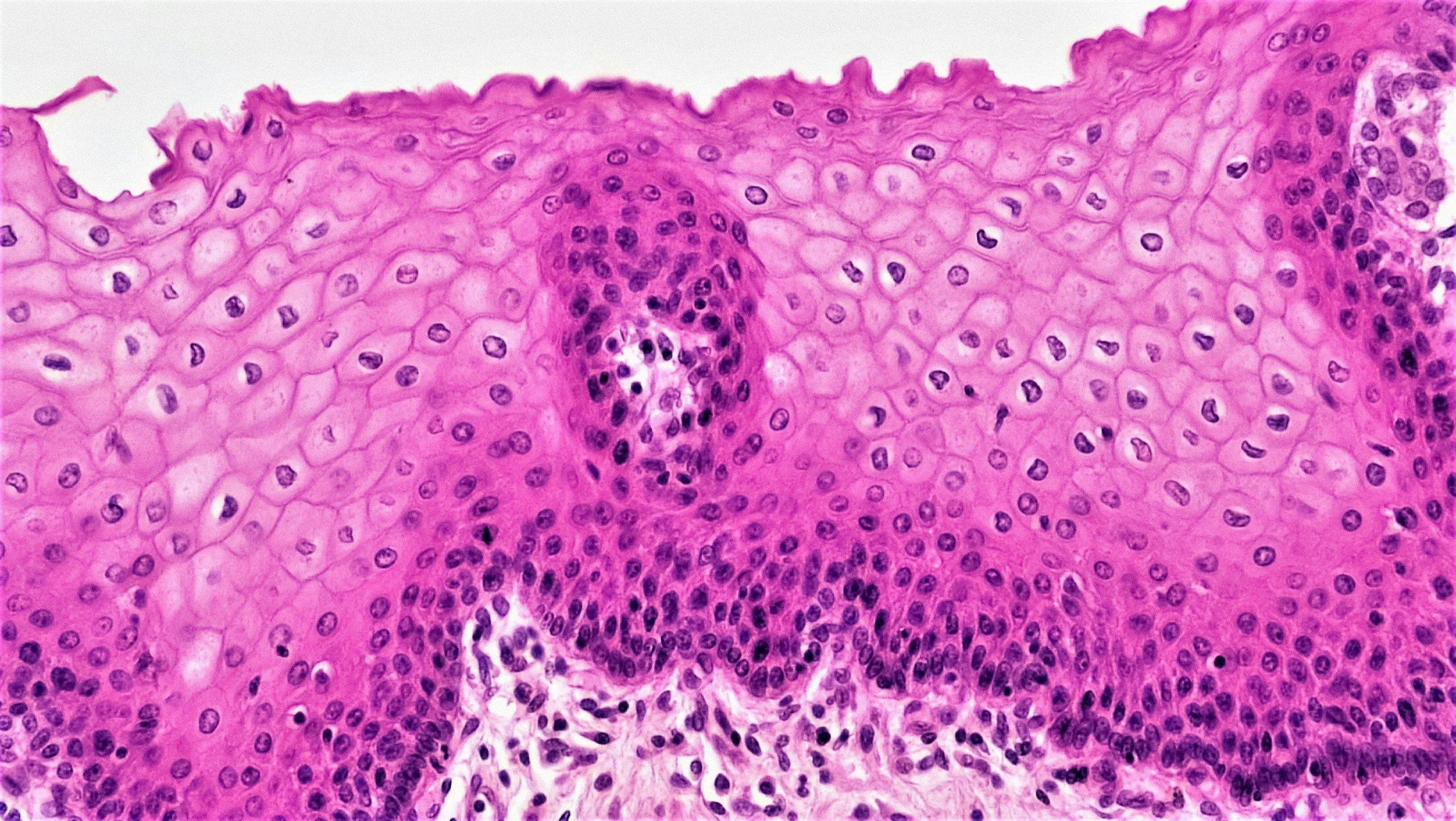
If Dr Louw needs to confirm a diagnosis, a skin biopsy provides a definitive answer. A small sample of skin is taken and sent to the laboratory for analysis — the procedure is quick, performed under local anaesthetic, and usually takes just a few minutes.
Skin biopsies are a fundamental procedure in dermatology, primarily used to aid in the diagnosis of various skin conditions. When a dermatologist encounters a suspicious lesion or rash, a biopsy allows for the extraction of a small skin sample, which is then sent to a laboratory for histological examination. This detailed analysis helps determine the nature of the skin condition, whether it is benign, malignant, or inflammatory, guiding further treatment decisions.
There are several techniques for performing a skin biopsy, with punch biopsy being one of the most common. During a punch biopsy, a small, circular blade is used to remove a core of tissue, including all skin layers — epidermis, dermis, and sometimes subcutaneous fat. The procedure is quick, minimally invasive, and performed under local anaesthesia. One of the significant advantages of a punch biopsy over a wedge excision is that it typically results in less scarring, as it removes a smaller area of skin.
Wedge excision involves removing a larger, wedge-shaped piece of skin, which can provide more extensive tissue for examination but often results in more noticeable scarring. Skin biopsies, particularly punch biopsies, offer a balance between obtaining an adequate tissue sample and minimising cosmetic concerns, making them a preferred diagnostic tool in dermatological practice.
-
Curettage & Cautery
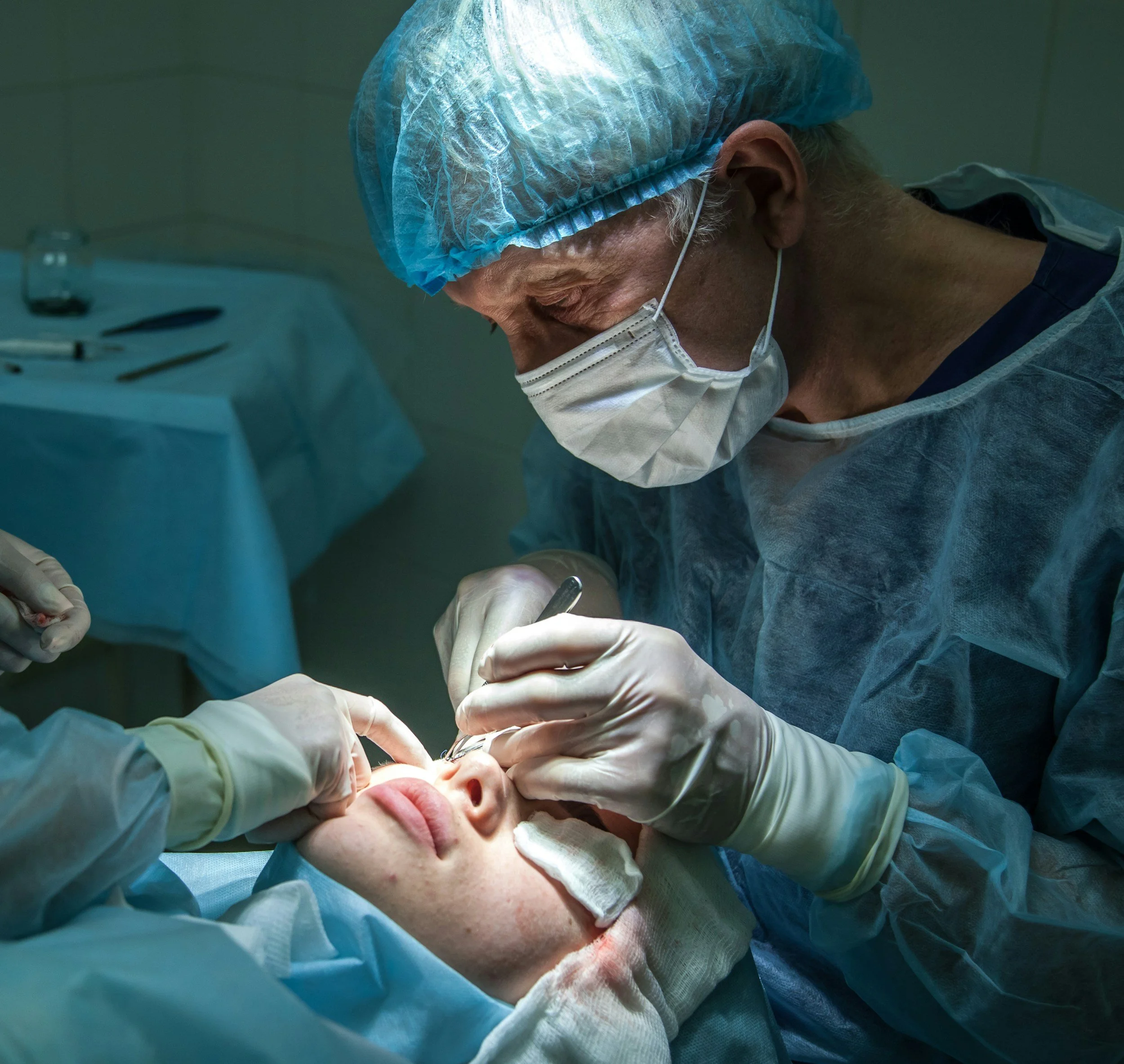
For certain surface-level skin lesions — such as seborrhoeic keratoses, superficial skin cancers, and warts — curettage and cautery offers a quick, effective treatment with no stitches and typically minimal scarring.
Curettage and cautery are widely used techniques in dermatology, particularly effective for removing certain types of skin lesions, such as superficial basal cell carcinomas, seborrhoeic keratoses, and warts. This minimally invasive procedure offers several advantages, including no need for stitches and a typically better cosmetic outcome compared to wedge excisions. The resulting scars are often less noticeable, making it a preferred choice for specific types of lesions in cosmetically sensitive areas.
The procedure begins with local anaesthesia to numb the treatment area. The dermatologist uses a curette, a small, spoon-shaped instrument, to scrape away the lesion. This step is followed by cautery, where an electric current is applied to the treated area to stop any bleeding and destroy any remaining abnormal cells. This dual approach ensures effective removal of the lesion while minimising blood loss and promoting rapid healing.
While curettage and cautery are highly effective for specific superficial lesions, not all skin lesions can be treated with this method. Deeper or more invasive cancers, such as some types of melanomas or large squamous cell carcinomas, require more extensive surgical excision. However, for suitable cases, curettage and cautery offer a quick, simple, and effective treatment option with excellent cosmetic results and minimal recovery time.
-
Shave Excisions
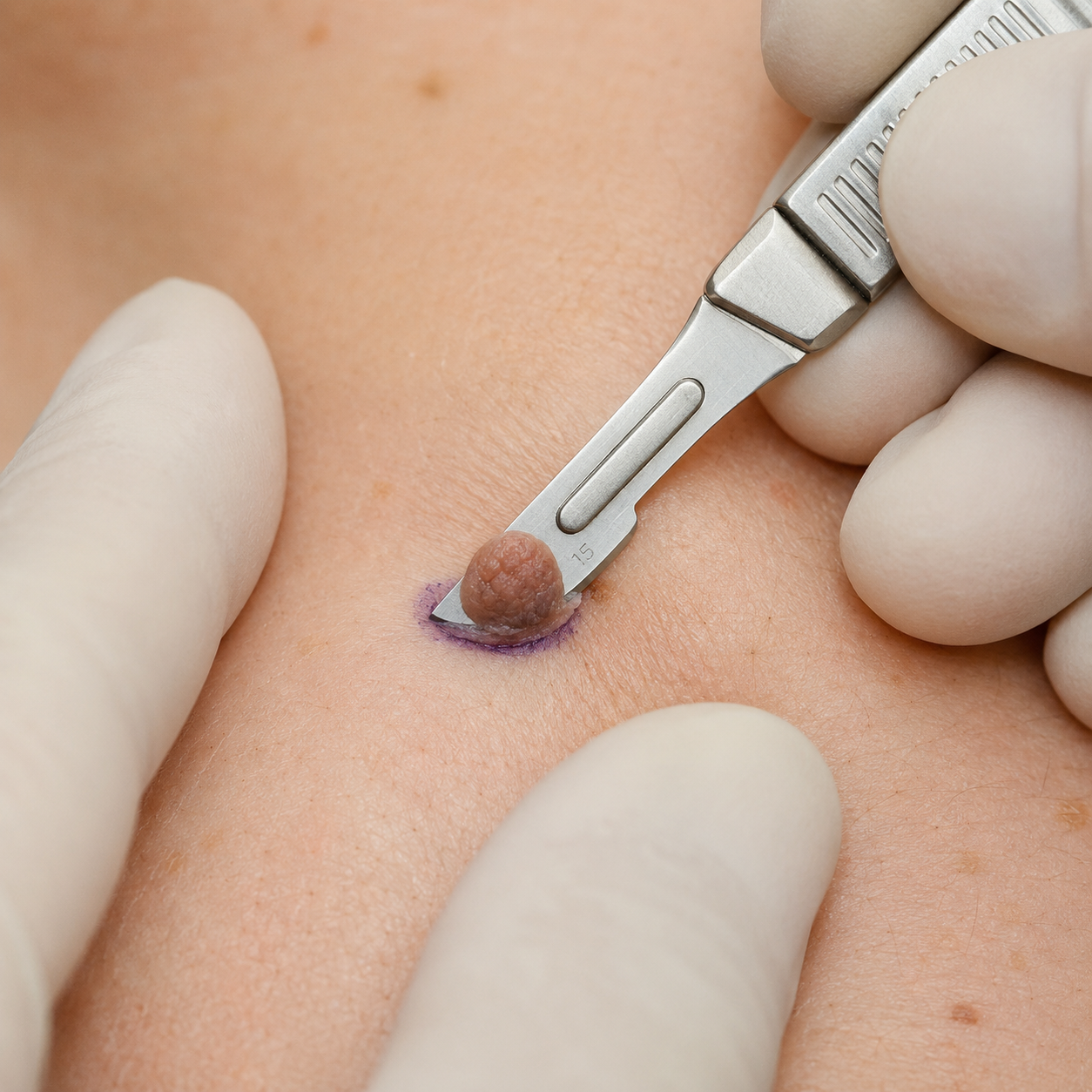
If you have a raised mole that catches on clothing or simply bothers you cosmetically, shave excision is a simple, stitch-free procedure that can remove it quickly and with a good cosmetic result.
Mole removal is often performed for two main reasons: when there is a suspicion that a mole might be a malignant melanoma, and for cosmetic or mechanical reasons, such as when moles catch on clothing or cause discomfort. Shave excision is a common technique used for removing non-suspicious moles that are being removed for aesthetic or mechanical purposes.
Shave excision involves literally shaving the mole flush with the surrounding skin. This technique does not require stitches, which typically results in a better cosmetic outcome compared to traditional excision methods that involve suturing. The procedure is quick and relatively painless, and patients can often resume their normal activities immediately afterward.
A common misconception is that removing normal moles can reduce the risk of developing malignant melanoma. This is not true, as a melanoma can develop anywhere on the skin. For suspicious-looking moles, complete excision is necessary, and the tissue is sent to a laboratory for histological evaluation. If the mole is confirmed to be malignant, a wider re-excision is usually required. However, for benign moles, shave excision offers a safe, effective, and cosmetically favourable solution without the need for stitches.
-
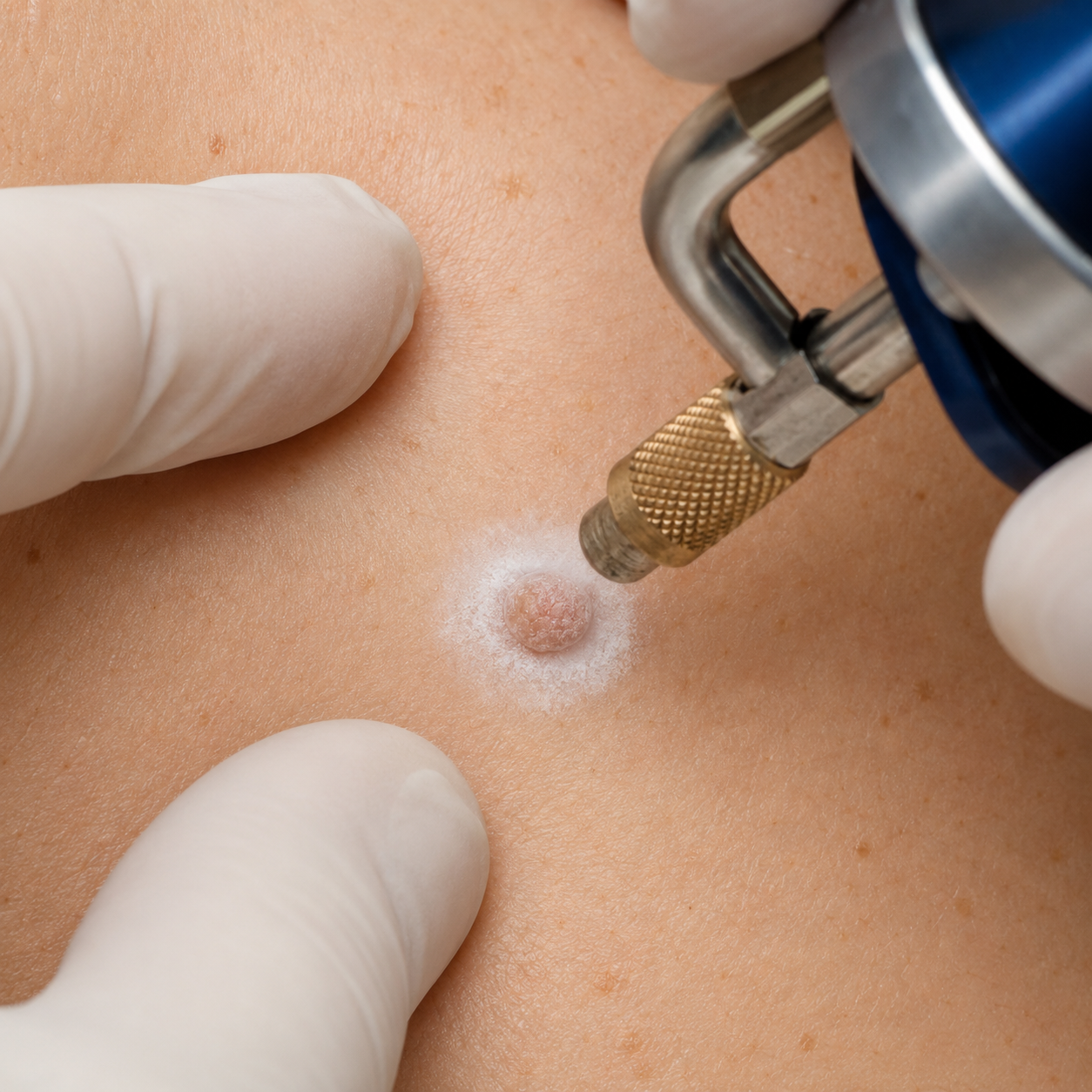
Cryotherapy
Cryotherapy uses liquid nitrogen to freeze and destroy surface skin lesions such as warts, sun spots (solar keratoses), and seborrhoeic keratoses. It is one of the most commonly performed procedures in dermatology.
Cryotherapy, also known as "freezing," is a widely used dermatological treatment that involves the controlled freezing of skin lesions. This technique is essentially a localised induction of frostbite, where a cold liquid, typically liquid nitrogen at a temperature of -196 degrees Celsius, is sprayed onto the skin lesion in aerosol form. The extreme cold destroys abnormal or diseased tissue, making it a valuable tool in dermatology.
Cryotherapy is commonly used to treat a variety of skin lesions, including warts, solar keratosis, seborrhoeic keratosis, and molluscum contagiosum. While it is a versatile and effective treatment option, cryotherapy can be uncomfortable and sometimes painful, particularly for children. Therefore, alternative therapies, such as wart immunotherapy or cantharidine application, are often considered for paediatric patients due to their less painful nature.
For conditions like solar keratosis and extensive sun damage, there are more advanced treatments available, such as photodynamic therapy, which may provide better outcomes. Despite these newer options, cryotherapy remains a valuable treatment choice for certain skin conditions due to its effectiveness and simplicity.
-
Frequently Asked Questions About Skin Surgery
Q: When should I see a dermatologist about a mole? You should book a consultation if a mole has changed in size, shape, or colour, if it bleeds or itches without reason, or if you notice a new mole appearing after the age of 30. The ABCDE rule is a helpful guide: Asymmetry, Border irregularity, Colour variation, Diameter over 6mm, and Evolving appearance. When in doubt, it is always better to have it checked by a specialist.
Q: Does mole removal hurt? All surgical procedures at Panorama Dermatology Clinic are performed under local anaesthetic, so you should feel little to no pain during the procedure. You may feel a brief sting when the anaesthetic is injected, but the area is numb within seconds. Most patients describe the experience as far more comfortable than they expected.
Q: How long does recovery take after skin surgery? Recovery depends on the type and size of the procedure. For small excisions and shave removals, most patients return to normal activities the same day. Stitches, if required, are usually removed after 7 to 14 days. Dr Louw will give you specific aftercare instructions at the time of your procedure.
Q: Will there be a scar after mole removal? Any procedure that breaks the skin will leave some mark, but dermatologists are trained to minimise scarring. Techniques such as ellipse excision are specifically designed to produce thin, well-aligned scars that fade over time. For cosmetic mole removals, shave excision avoids stitches and typically produces an excellent result.
Q: Does medical aid cover skin surgery? Most medical aids cover medically necessary skin surgery, including the removal of suspected skin cancers and diagnostic biopsies. Cosmetic mole removals are generally not covered. We recommend contacting your medical aid before your appointment to confirm your benefits. Our practice can provide the relevant procedure codes if needed.
Q: What is the difference between a biopsy and an excision? A biopsy removes a small sample of skin for laboratory analysis to confirm a diagnosis. An excision removes the entire lesion, usually with a margin of healthy skin. Sometimes a biopsy is done first, and if the results require it, a full excision follows. Dr Louw will explain which approach is appropriate for your specific situation.
Q: Can I drive home after skin surgery? Yes, in almost all cases. Our procedures are performed under local anaesthetic, so there is no sedation involved. You can drive yourself to and from the appointment.
Q: How often should I have a full skin check? If you have a history of skin cancer, many moles, or significant sun exposure, Dr Louw recommends an annual full-body skin examination. If you notice any changing or new lesions between checks, book an earlier appointment. South Africa has one of the highest rates of skin cancer in the world — regular screening saves lives.