
What is vitiligo?
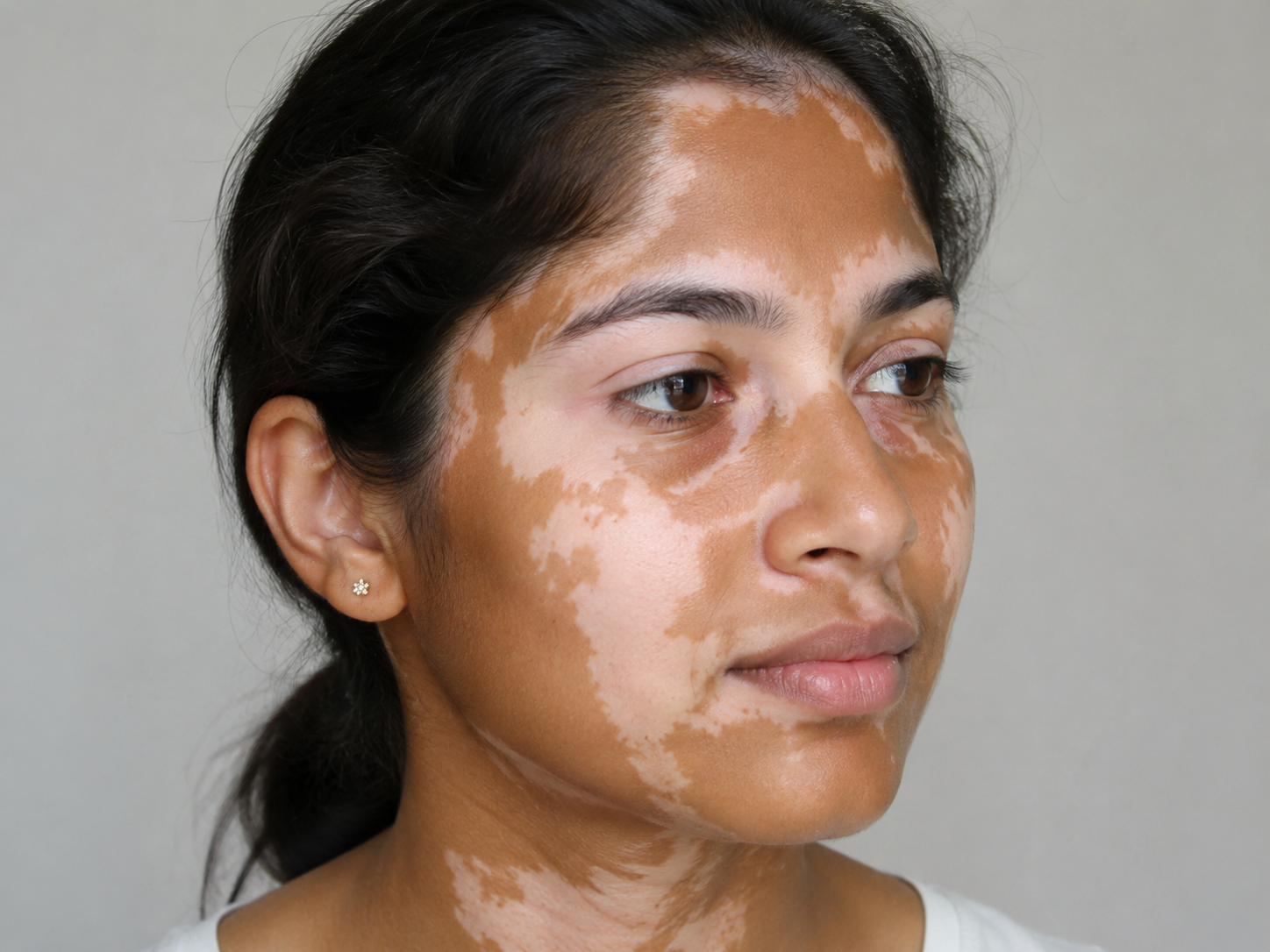
Vitiligo is an autoimmune condition in which the immune system mistakenly attacks the melanocytes — the cells that produce the pigment that gives skin its colour. As these cells are lost, the skin develops well-defined, milky-white patches. It is not contagious, it is not caused by anything you have done, and it is not a sign of poor health in itself.
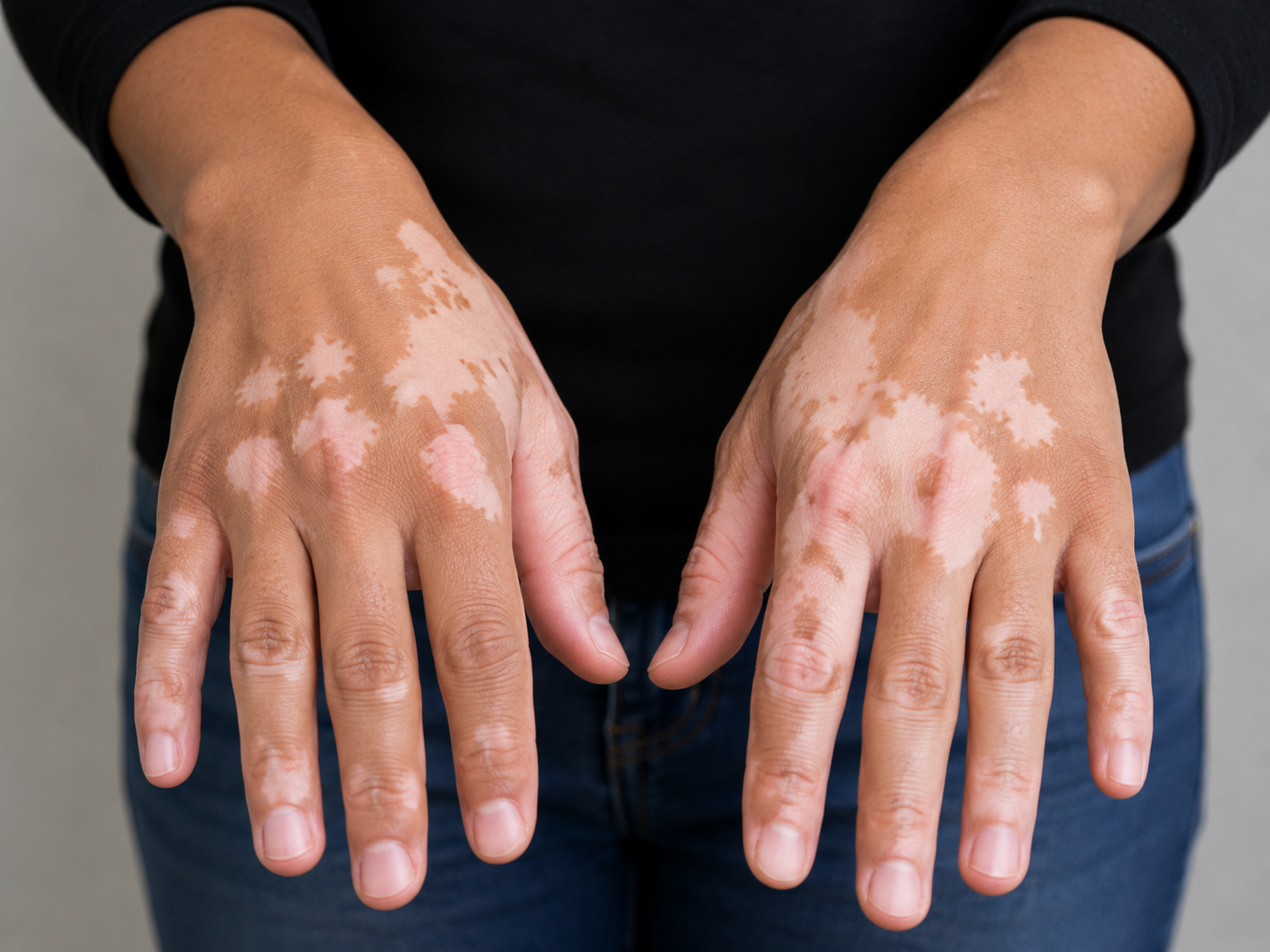
Vitiligo can begin at any age, though it often appears before the age of 30. It affects all skin types and ethnicities, and in South Africa I see it across our full diversity of patients. The patches frequently appear on the face, hands, around the eyes and mouth, in the body folds, and over areas that are exposed to friction or pressure.
The two main types
Distinguishing the type of vitiligo matters, because it changes both the treatment plan and the outlook.
Non-segmental vitiligo is the most common form. It tends to appear symmetrically on both sides of the body, often progresses in episodes over time, and is the type most strongly linked to other autoimmune conditions.
Segmental vitiligo affects one area or one side of the body, usually appears earlier in life, and tends to progress for a while and then stabilise. It often responds particularly well to surgical repigmentation once it is stable.
Some patients have focal (single-patch) or, less commonly, more extensive disease. I will classify your vitiligo carefully at the first consultation.
Vitiligo Treatment in Cape Town
A specialist-led, evidence-based approach to vitiligo
Vitiligo is a condition I see regularly in my Panorama practice, and one that often carries an emotional weight far greater than its medical risk. The loss of pigment can be distressing — particularly for patients with deeper skin tones, where the contrast is more visible — and many people are told there is nothing to be done. That is not true. Vitiligo cannot always be cured, but in the right hands it can frequently be stabilised and, in many cases, meaningfully repigmented.
My approach is to confirm the diagnosis, screen for the associated conditions that often accompany vitiligo, and then build a treatment plan matched to the type of vitiligo you have, where it is on your body, and how active it currently is. Vitiligo treatment rewards patience and consistency, and I will always be honest with you about what is realistically achievable for your skin.
What causes vitiligo, and what it is associated with
Vitiligo arises from a combination of genetic susceptibility and immune activity. A family history is common, and a number of triggers can bring it on or worsen it, including significant skin trauma or sunburn (new patches can appear at sites of injury — the Koebner phenomenon), and periods of physical or emotional stress.
Because vitiligo is autoimmune, it is associated with other autoimmune conditions — most importantly thyroid disease (both underactive and overactive thyroid). For this reason I routinely screen for thyroid dysfunction and, where the history suggests it, for other associated conditions such as type 1 diabetes, pernicious anaemia and alopecia areata. Identifying and managing these is an important part of caring for the whole patient, not just the skin.
How I diagnose vitiligo
Vitiligo is usually a clinical diagnosis. In my consultation I will:
Take a full history, including when the patches appeared, how they have changed, any triggers, and your family and autoimmune background.
Examine your skin under good lighting and with a Wood's lamp, which makes areas of pigment loss easier to see and helps map how active and extensive the condition is — especially valuable in fairer skin where patches can be subtle.
Arrange blood tests to screen for associated autoimmune disease, principally thyroid function.
Occasionally take a small skin biopsy where the diagnosis is uncertain or to exclude conditions that can mimic vitiligo.
An accurate diagnosis and an assessment of disease activity are what allow us to choose treatment sensibly rather than by trial and error.
Treatment options I offer
There is no single treatment that suits everyone. The best results come from matching the therapy to the type, extent, activity and location of your vitiligo, and often from combining approaches. Repigmentation is generally most successful on the face and neck and slowest — sometimes minimal — on the hands, feet and lips.
Topical anti-inflammatory therapy. Topical corticosteroids and topical calcineurin inhibitors (tacrolimus and pimecrolimus) are the mainstay of treatment for limited vitiligo. The calcineurin inhibitors are particularly useful on the face and around the eyes, where they avoid the thinning that long-term steroids can cause. These calm the immune attack and encourage pigment cells to return.
Phototherapy.Narrowband UVB phototherapy is the best-established treatment for more widespread vitiligo and can produce gradual, worthwhile repigmentation over a course of months. I offer phototherapy at the clinic, and I frequently combine it with topical treatment, which tends to work better than either alone. For small, localised patches, targeted phototherapy approaches can be considered.
Newer targeted treatments. Topical JAK-inhibitor therapy (ruxolitinib cream) has recently been approved internationally for non-segmental vitiligo and represents a genuine advance for selected patients. Availability and cost in South Africa are still evolving, so I will discuss honestly whether it is a practical option for you, and where it might fit alongside established treatments rather than replacing them.
Treatment to arrest rapidly spreading disease. When vitiligo is spreading quickly, a short, carefully monitored course of systemic treatment can help to halt progression so that repigmentation therapies have a stable base to work from.
Surgical repigmentation. For stable vitiligo — particularly the segmental type — that has not responded to medical treatment, melanocyte transplantation and skin-grafting techniques can restore pigment to areas that would otherwise remain white. These are reserved for carefully selected, stable cases and not done in-clinic.
Camouflage, sun protection and depigmentation. Medical camouflage and self-tanning preparations can make patches far less noticeable and are a legitimate, valuable part of care. Sun protection matters in two ways: depigmented skin has no natural protection and burns easily, and protecting the surrounding skin reduces the contrast that makes patches stand out. In the small number of patients with very extensive vitiligo, evening out the remaining pigment through depigmentation is occasionally the most practical route — always a considered, fully discussed decision.
Support for the whole person. Vitiligo can have a real psychological impact. I take that seriously, and part of my role is to support you through it and, where helpful, to involve additional support.
What to realistically expect
Vitiligo treatment is a gradual process measured in months, not weeks. Some patients achieve excellent repigmentation, others a partial but worthwhile response, and in some the main goal is to stop the condition from spreading. Results depend heavily on the type of vitiligo, how long the patches have been present, and where they are on the body. I will set out a realistic plan with you, review progress as we go, and adjust the approach as your skin responds.
Frequently asked questions
Can vitiligo be cured? There is no guaranteed cure, but vitiligo can often be stabilised and repigmented. Many patients see meaningful improvement with the right combination of treatment, especially when it is started before the condition becomes long-standing.
Is vitiligo contagious or dangerous? No. Vitiligo cannot be passed to others and is not dangerous to your general health. Because it is linked to autoimmune conditions such as thyroid disease, however, screening for those is worthwhile.
Which areas respond best to treatment? The face and neck usually respond best. The hands, feet and lips are the most resistant. This is one reason an individual assessment matters before predicting results.
How long before I see repigmentation? Expect a timeline of months. Early signs of pigment often appear as small dots within treated patches, which gradually expand with continued treatment.
Will sun exposure help my vitiligo? Unprotected sun exposure is not a treatment and carries real risk: depigmented skin burns easily, and sunburn can trigger new patches. Controlled medical phototherapy is very different from sunbathing and is delivered under supervision.
Does medical aid cover vitiligo treatment? Cover varies by scheme and by the treatment involved. I will discuss the likely costs of your plan transparently before we begin.
Book a vitiligo consultation in Cape Town
I see patients with vitiligo at Panorama Dermatology Clinic, conveniently located at 46 Hennie Winterbach Street in Panorama, and I welcome patients from Panorama, Durbanville, Bellville, Brackenfell, Kraaifontein, Parow, Goodwood and the wider Northern Suburbs.
If you would like a clear, evidence-based assessment of your vitiligo and a realistic plan to manage it, I would be glad to see you.
Phone: 021 911 5470 WhatsApp: 079 321 1973