
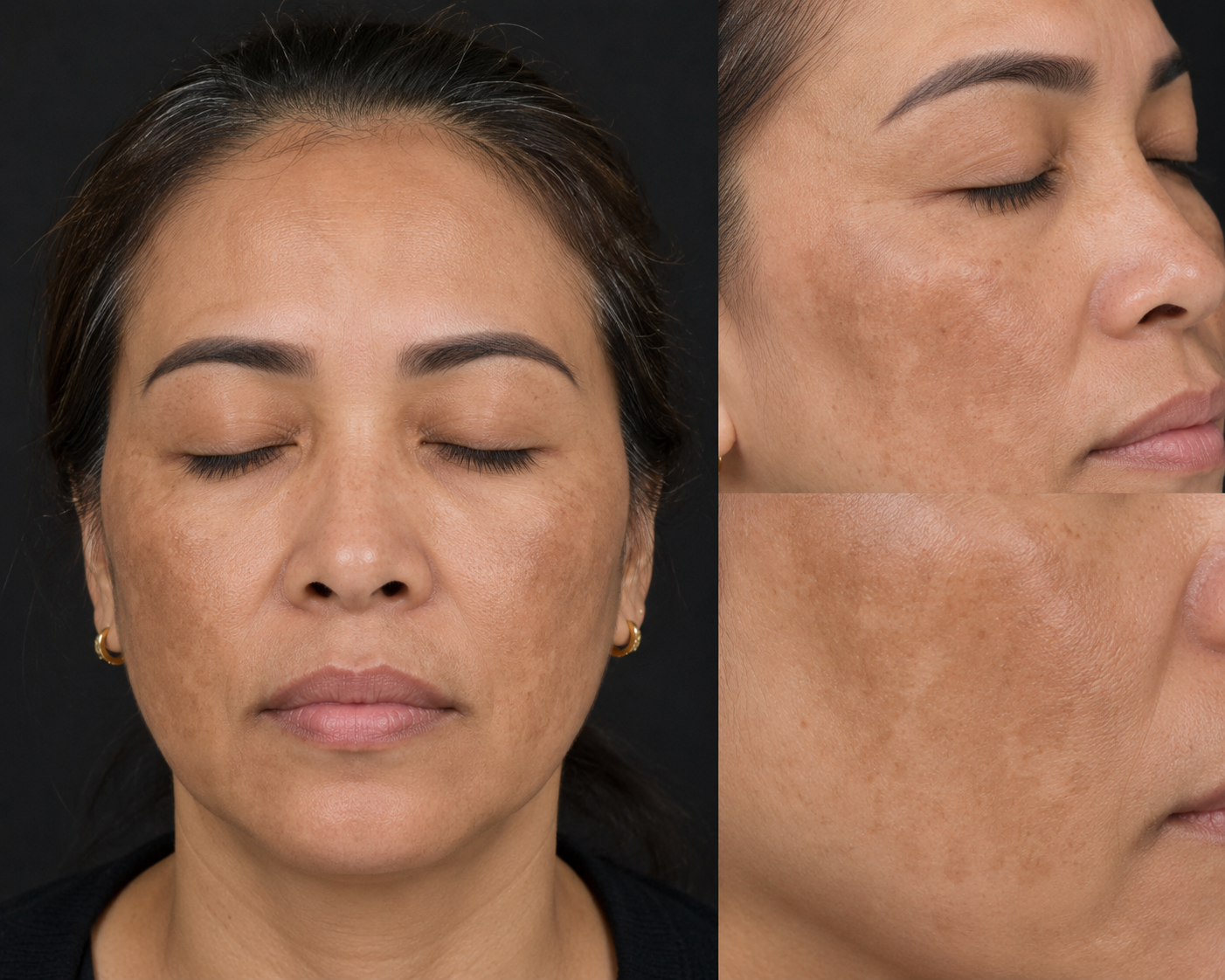
What is melasma?
Melasma is a chronic, acquired pigmentary disorder in which the melanocytes (the pigment-producing cells of the skin) become overactive in response to a combination of triggers. The result is patchy hyperpigmentation, usually on sun-exposed areas of the face. It is sometimes called "the mask of pregnancy" because of its association with hormonal change, but it affects many men and women who have never been pregnant.
There are three clinical patterns:
Centrofacial — the most common pattern, affecting the forehead, cheeks, nose, upper lip and chin.
Malar — confined to the cheeks and nose.
Mandibular — along the jawline, more typical in older patients.
Melasma is also classified by the depth of pigment (epidermal, dermal or mixed). This matters because it influences how the condition is likely to respond to treatment.
What causes melasma?
In most patients, melasma is driven by a combination of factors rather than a single cause:
Ultraviolet and visible light exposure. Even short, incidental sun exposure can trigger a flare. Visible light from the sun and from screens also contributes, particularly in darker skin types.
Heat. Heat alone can stimulate melanocytes — relevant for patients who exercise outdoors, work in hot environments, or spend time near ovens or heaters.
Hormonal influences. Pregnancy, the combined oral contraceptive pill, and hormone replacement therapy are common triggers.
Genetic predisposition. Melasma runs in families and is more common in skin of colour, including South African patients of Cape Malay, Indian, mixed-heritage and African descent.
Medication and cosmetic irritation. Certain medications and harsh cosmetic procedures can worsen pigmentation.
In Cape Town specifically, year-round UV exposure and a hot, sunny coastal climate mean that sun-related triggers are by far the most important driver — and the most actionable.
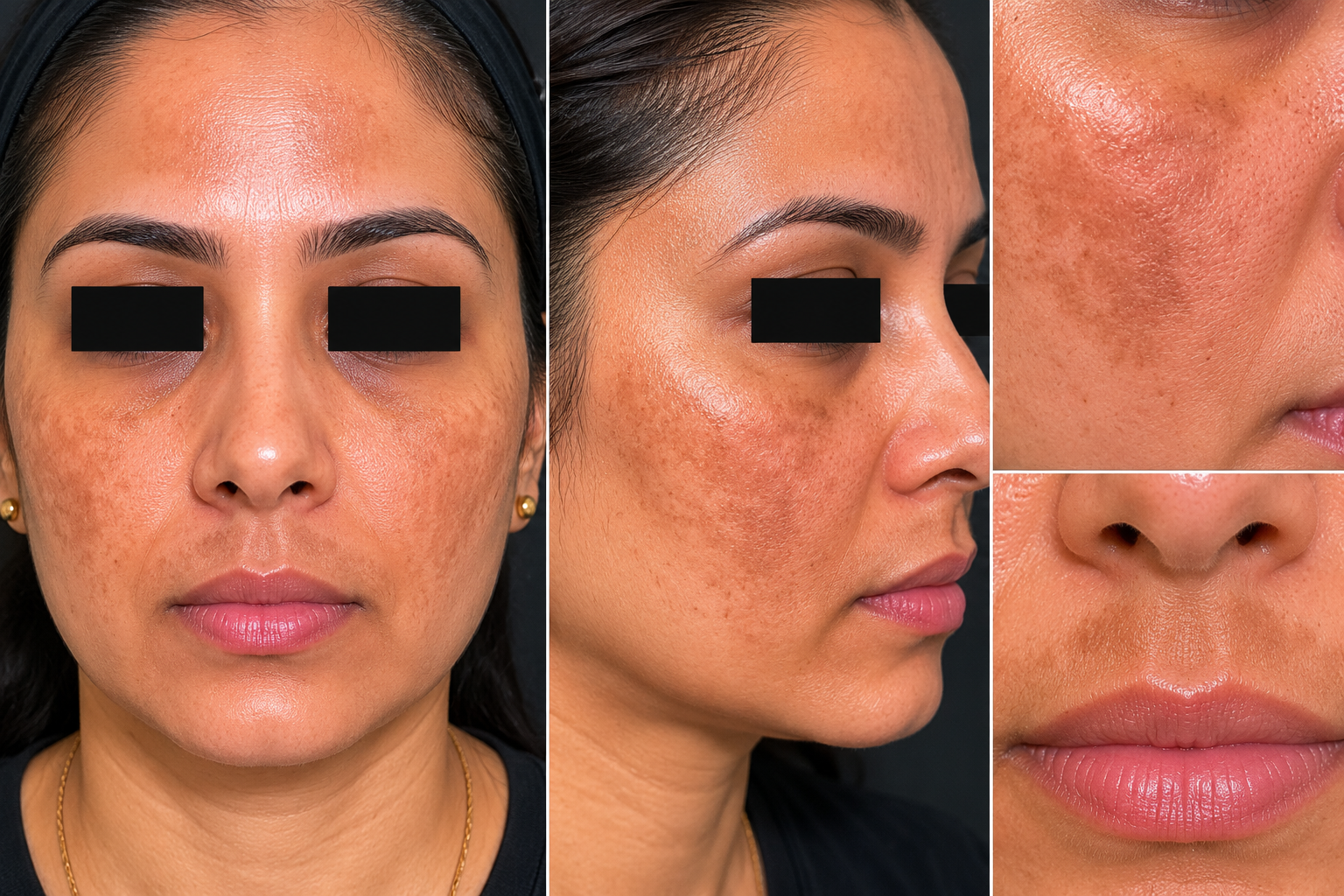
Melasma Treatment in Cape Town
A specialist-led approach to a stubborn pigmentation problem
Melasma is one of the most common pigmentation concerns I see in my Panorama practice, and one of the most frustrating to live with. It typically presents as symmetrical, brownish or greyish patches on the cheeks, forehead, upper lip or jawline, and it can persist for years if it is not managed correctly. The Cape Town climate — long summers, high UV index, and frequent reflected light off the sea and pavements — makes our patients particularly susceptible to flares.
My approach is to confirm the diagnosis carefully, identify what is driving the pigmentation in your particular case, and then build a treatment plan that combines effective in-clinic procedures with realistic, sustainable home care. Melasma is treatable, but it requires patience, consistency and the right combination of evidence-based interventions
How I diagnose melasma
Melasma is usually a clinical diagnosis based on history and careful examination. In my consultation I will:
Take a detailed history of pigmentation onset, triggers, hormonal factors and previous treatments.
Examine the skin under good lighting and with dermoscopy to assess the depth and pattern of pigment.
Where helpful, use Wood's light examination to distinguish epidermal from dermal pigment, which guides treatment expectations.
Rule out conditions that can mimic melasma, including post-inflammatory hyperpigmentation, drug-induced pigmentation, lichen planus pigmentosus and, less commonly, certain photosensitive conditions.
An accurate diagnosis matters: many "melasma" treatments fail simply because the underlying problem was not melasma in the first place.
Treatment options I offer
There is no single cure for melasma. The best results come from a layered approach that addresses the trigger, calms melanocyte activity, and removes existing pigment safely.
Sun protection — the non-negotiable foundation. Daily broad-spectrum sunscreen (SPF 50+, with cover for visible light, ideally a tinted formulation containing iron oxides) is the single most important intervention. Without strict photoprotection, no other treatment will hold.
Topical therapy. The mainstay of medical treatment. Options include hydroquinone (used in carefully controlled courses), azelaic acid, kojic acid, tranexamic acid topicals, retinoids and combination "triple therapy" formulations. I tailor the regimen to your skin type, the depth of pigment and any history of sensitivity.
Oral tranexamic acid. For appropriate patients, low-dose oral tranexamic acid is one of the most effective additions to melasma care developed in the last decade. It requires screening for clotting risk and ongoing monitoring, but for the right patient it can produce results that topical treatment alone cannot. (Read my detailed article on tranexamic acid for melasma on the blog.)
Chemical peels. Carefully chosen superficial peels — typically glycolic, lactic, mandelic or salicylic acid, sometimes combination peels — can accelerate clearance when integrated with a strong home regimen. Peel selection in melasma is delicate: the wrong peel in the wrong skin type can worsen pigmentation.
Laser and energy-based treatments. Low-fluence Q-switched lasers and selected non-ablative options can be useful in resistant cases, but lasers are a double-edged tool in melasma. They must be used cautiously, in skilled hands, and never as a first-line treatment. I will only recommend laser when the rest of the regimen has been optimised.
Microneedling with adjunctive topicals. Useful for stubborn, dermal pigment when paired with the right pharmacological support.
What to realistically expect
Melasma is chronic and prone to relapse. With a well-designed plan, most patients see meaningful improvement within three to six months, but maintenance treatment and lifelong sun protection are essential. I will be honest with you about what is achievable for your skin type and pigment depth, and we will adjust the regimen as your skin responds.
Frequently asked questions
Will my melasma ever fully clear? Many patients achieve substantial improvement, and some achieve near-complete clearance. Because melasma is chronic, ongoing maintenance and strict sun protection are needed to prevent return.
Is melasma dangerous? No. Melasma is a cosmetic condition with no medical risk. It can, however, be a significant source of distress and is worth treating for that reason alone.
Can I treat melasma during pregnancy? During pregnancy and breastfeeding I limit treatment to sun protection and pregnancy-safe topicals such as azelaic acid. Stronger therapies are deferred until after weaning.
Is laser the fastest way to clear melasma? No, and inappropriate laser is one of the most common reasons melasma worsens. Topical therapy, sun protection and oral tranexamic acid (where appropriate) come first.
How long until I see results? Most patients notice early improvement at six to eight weeks, with more substantial clearance at three to six months of consistent treatment.
Will medical aid cover melasma treatment? Melasma is considered cosmetic and is not generally covered by medical aid in South Africa. I will discuss costs transparently before starting treatment.
Book a melasma consultation in Cape Town
I see patients with melasma at Panorama Dermatology Clinic, conveniently located at Mediclinic Panorama and serving patients from Panorama, Durbanville, Bellville, Brackenfell, Kraaifontein, Parow, Goodwood and the wider Northern Suburbs.
If you would like a structured, evidence-based plan for your pigmentation, I would be glad to see you.
Phone: 021 911 5470 WhatsApp: 079 321 1973 Book online: Contact page