
Patch Testing in Cape Town
Specialist diagnosis for contact allergy and unexplained skin reactions
Some of the most rewarding patients I see at my Panorama practice are those whose persistent rash, hand dermatitis, eyelid swelling or "treatment-resistant eczema" turns out to be a contact allergy that nobody has identified before. Patch testing is the gold-standard investigation for these patients, and unfortunately it is offered by relatively few practices in the Cape Town area. I have invested in the reagents, protocols and follow-up structure required to perform patch testing properly, and I see patients for this from across the Northern Suburbs and greater Cape Town.
What is patch testing?
Patch testing is a structured clinical investigation that identifies delayed-type (Type IV) hypersensitivity reactions to substances that have come into contact with the skin. It is the only reliable way to diagnose allergic contact dermatitis — a condition that often mimics or coexists with eczema, and that cannot be diagnosed from blood tests or from skin-prick testing.
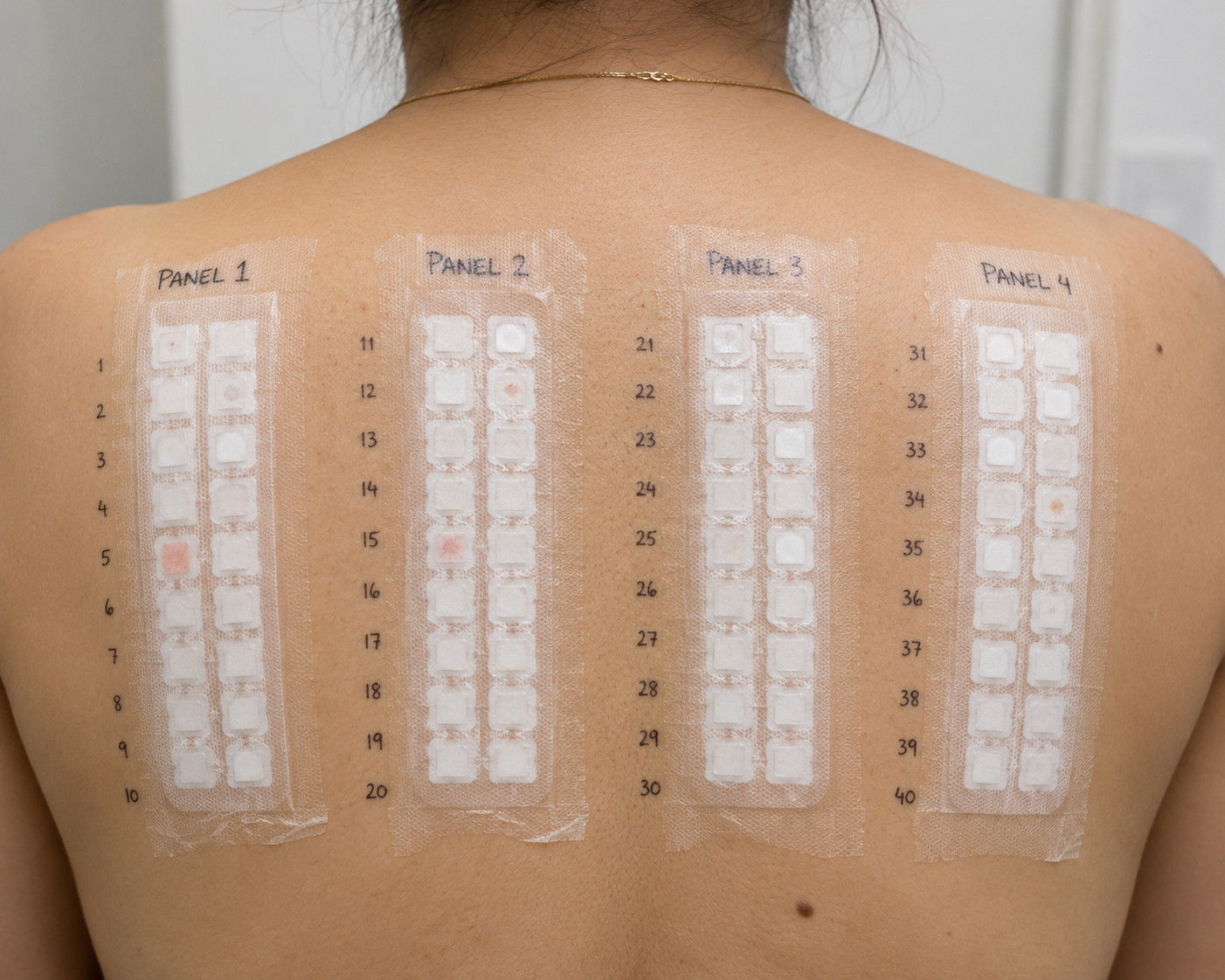
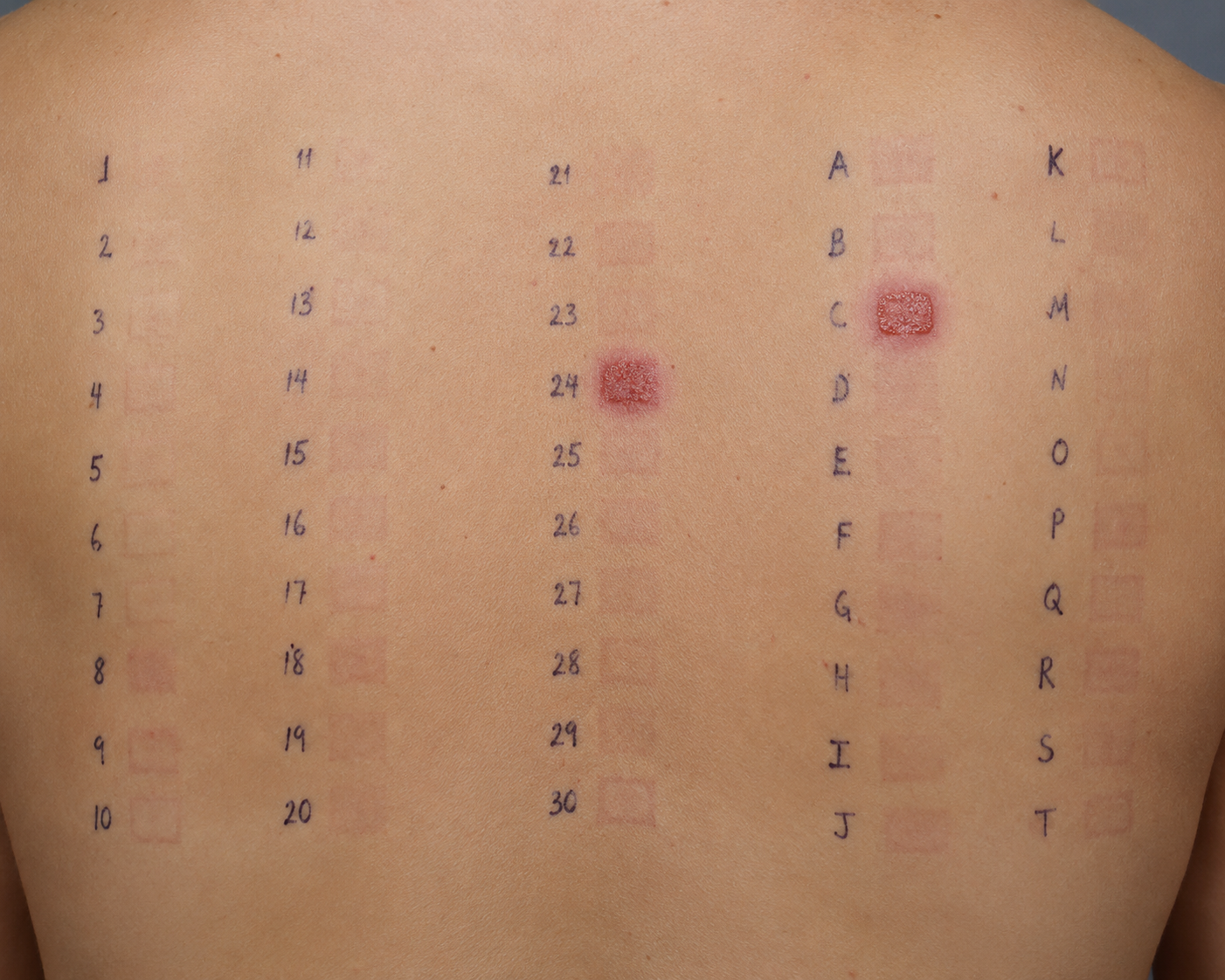
The investigation involves applying small, controlled amounts of a standardised panel of common allergens to the skin of the upper back, leaving them in place for 48 hours, and then reading the skin reactions at 48 and 96 hours. A positive patch test pinpoints the substance you are reacting to, which means you can avoid it — often resolving a rash that has frustrated you for years.
It is important to understand what patch testing is not:
It is not the same as skin-prick testing or RAST/specific-IgE blood testing, which identify immediate (Type I) allergies such as food, pollen or bee-sting allergy.
It is not a single-visit investigation. Accurate interpretation requires three visits across a week.
It is not a screening test. It should be used when there is a clinical suspicion of contact allergy.
Who should consider patch testing?
I recommend patch testing for patients with:
Chronic or refractory eczema, particularly when it does not follow a typical atopic pattern.
Hand and foot dermatitis, especially in hairdressers, healthcare workers, cleaners, mechanics, chefs and anyone with significant occupational chemical exposure.
Eyelid, facial or lip dermatitis that may relate to cosmetics, fragrances or eye-drop preservatives.
Anogenital itching or dermatitis where topical preparations, wet wipes or feminine-hygiene products may be contributing.
Scalp dermatitis in patients using hair dye, relaxers or hair-care products.
Persistent reactions around jewelry, watch-straps, belt buckles or piercings (suspected nickel or cobalt allergy).
Dermatitis around chronic wounds, leg ulcers or stomas, where topical medicaments and dressings are common culprits.
Suspected allergy to topical medications, including corticosteroids, antibiotic ointments, anesthetic creams or wound-care products.
The allergens I test for
I use the European Baseline Series, the internationally standardised panel of the most common contact allergens, which covers around thirty substances including nickel, cobalt, chromium, fragrance mixes, preservatives (such as methylisothiazolinone, formaldehyde and parabens), rubber accelerators, hair-dye chemicals (paraphenylenediamine), topical corticosteroids and other common culprits.
Where indicated, I add extended series tailored to the clinical history — for example, a hairdresser's series, a cosmetic series, a topical-medicament series, a dental series, or testing of the patient's own personal-care products (a "patient-bring-your-own" panel). This targeted approach is more informative than testing everyone with the same panel.
What to expect: the three-visit process
Patch testing is performed across a week, and all three visits are essential for an accurate result.
Visit 1 — Day 0 (application). I take a detailed history of your symptoms, exposures, occupation, hobbies and personal-care products. I then apply the patch-test chambers to your upper back. You leave the practice with the patches in place. The appointment usually takes 45–60 minutes.
Visit 2 — Day 2 (48 hours). The patches are removed and the first reading is taken. Early positive reactions are recorded.
Visit 3 — Day 4 (96 hours, sometimes Day 5 or 7). The definitive reading is taken. Many true allergic reactions only become positive at this later time point, which is why a single 48-hour reading is unreliable. I then explain each positive result, what the allergen is, where it is commonly found and — most importantly — how to avoid it in everyday products.
Preparing for patch testing
For accurate results I will usually ask you to:
Avoid oral corticosteroids and immunosuppressants (where clinically appropriate) for two to four weeks before testing.
Avoid topical steroids and other topical anti-inflammatory creams on your upper back for at least one week before testing.
Avoid significant sun exposure to the upper back for one to two weeks before testing.
Keep the patches dry during the testing week — no swimming, sauna, gym sweat or hot showers that wet the back.
Bring your own products (cosmetics, hair products, topical medications, occupational chemicals) if relevant, so we can test them alongside the standard series.
I will give you a detailed written preparation sheet at the time of booking.
After the test: putting the result to work
A positive patch test is only useful if you can act on it. At the final visit I will give you:
A clear explanation of each allergen you are sensitive to.
A written list of the common product categories, ingredients and trade names where the allergen is found.
Guidance on alternative products that are safe for you to use.
A plan for any further treatment of your underlying dermatitis.
For many patients, identifying and avoiding a single allergen — a fragrance, a preservative, a rubber chemical — produces a transformation that no cream alone could achieve.
Frequently asked questions
Does patch testing hurt? The application is painless. Patches are taped to the upper back and most patients find them only mildly uncomfortable. A positive reaction may itch.
Will medical aid cover patch testing? Patch testing is a recognised medical investigation. Coverage depends on your scheme and plan. My reception will discuss costs with you when you book and we will issue an invoice you can submit to your medical aid.
How accurate is patch testing? When performed and interpreted correctly, patch testing is highly reliable for diagnosing contact allergy. However, no test is perfect; results must always be interpreted in the context of your clinical history.
Can I do patch testing if I am pregnant? I usually defer patch testing during pregnancy and breastfeeding, both because of the unknown effect on the pregnancy of skin reactions and because results may be less reliable.
Do I need a referral? No referral is needed to book directly with me. If you have been referred by your GP or another specialist, please bring the referral letter.
How long does the whole process take? You will need to attend three appointments across one week (typically Monday, Wednesday and Friday). The actual time at the practice is around 45 minutes for the first visit and 20–30 minutes for the readings.
Book patch testing in Cape Town
If you have persistent dermatitis, occupational skin disease or a rash that no one has been able to explain, structured patch testing may be the missing piece. I see patients at Panorama Dermatology Clinic at Mediclinic Panorama, and I welcome patients from Panorama, Durbanville, Bellville, Brackenfell, Kraaifontein, Parow, Goodwood and across the Northern Suburbs and greater Cape Town.
Phone: 021 911 5470 WhatsApp: 079 321 1973 Book online: Contact page