
How Often Should You Have a Skin Cancer Check?
Skin cancer is the most common cancer in South Africa, and Cape Town's combination of strong year-round sun and a large fair-skinned population makes it a particular concern here in the northern suburbs. The good news is that most skin cancers are highly treatable when they are found early. The question I am asked most often is a simple one: how often should I actually have my skin checked?
The honest answer is that there is no single interval that suits everyone. How often you need a skin cancer check depends on your personal risk. Below I have set out how I think about it with my own patients, so you can work out roughly where you fit — and when it is worth booking.
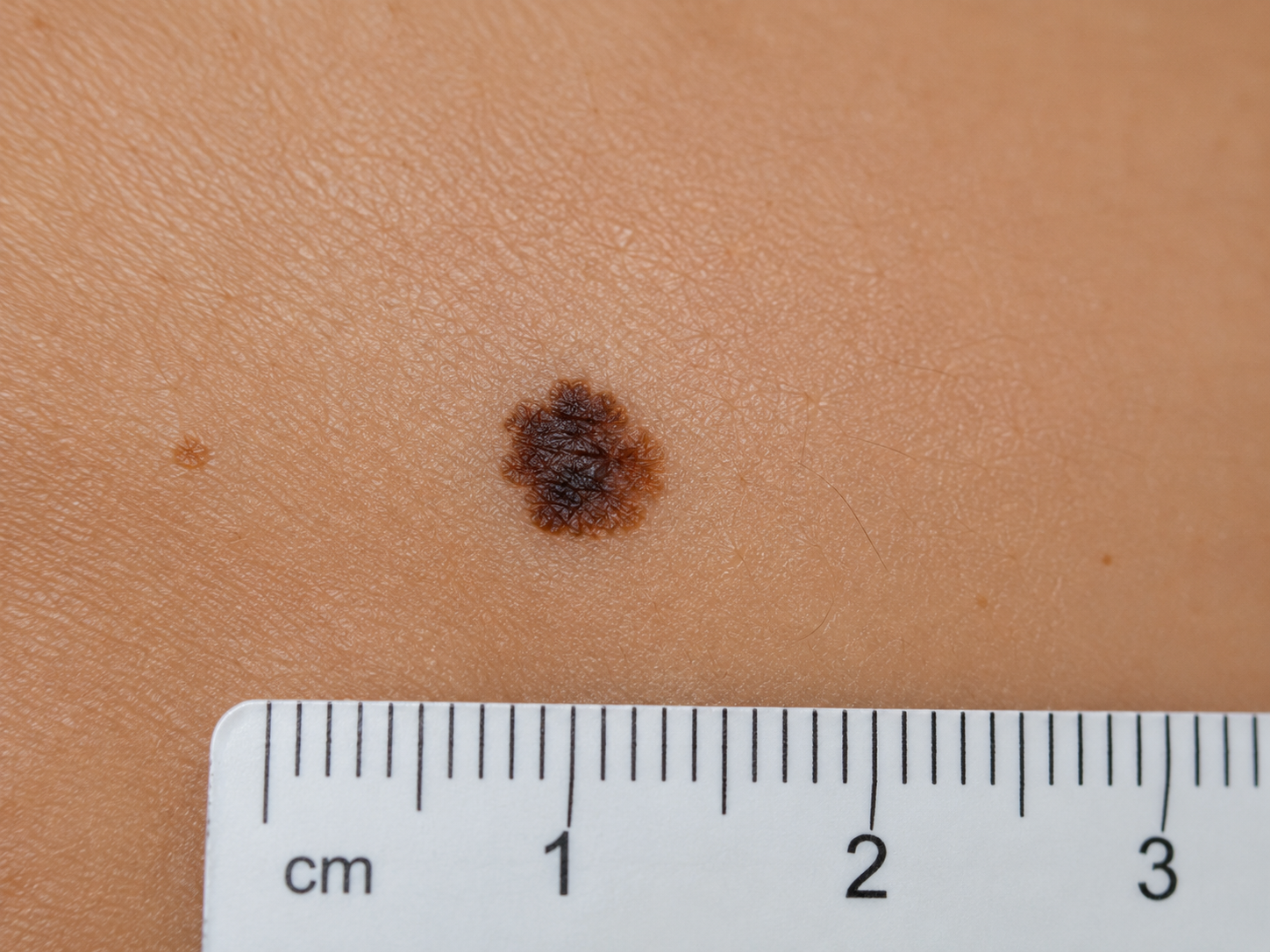
A Melanoma on the back
Why regular skin checks matter
A melanoma caught early, while it is still thin and confined to the surface, is usually cured by a straightforward excision. The same melanoma found a year or two later, once it has grown deeper, becomes a far more serious problem. Non-melanoma skin cancers such as basal cell and squamous cell carcinoma are rarely life-threatening, but left alone they keep growing locally and can become disfiguring, especially on the face.
Catching these changes early is the entire point of a skin check. It is quick, painless, and the most reliable way to find a problem while it is still easy to treat. If you would like to understand the underlying process, I have written separately about how sunlight damages skin and sets these cancers in motion.
How often — by risk group
Average risk — every 1 to 2 years. If you have no personal or family history of skin cancer, no unusual moles, and only ordinary sun exposure, a professional skin check every one to two years is reasonable, alongside your own monthly self-checks at home.
Higher risk — every 6 to 12 months. I would suggest more frequent checks if you have:
Fair skin that burns easily, light eyes, or red or blonde hair
A large number of moles, or several atypical (irregular) moles
A personal history of skin cancer or pre-cancerous lesions
A close family member who has had melanoma
A history of significant sunburn, outdoor work, or tanning-bed use
A suppressed immune system, for example after an organ transplant
Anyone who has already had a skin cancer — as advised, often every 3-6 months at first. If you have been treated for a skin cancer, your risk of developing another is higher, and your follow-up interval should be set individually.
These are starting points, not rigid rules. After examining your skin I will usually recommend a specific interval that fits your situation.
Don't wait for your scheduled check if something changes
Scheduled checks are about finding problems you cannot see. But you should book sooner — regardless of when your last check was — if you notice any of the following:
A new mole or spot appearing in adulthood
An existing mole that changes in size, shape, or color
A mole with an irregular border or more than one color
A spot that itches, bleeds, crusts, or simply will not heal
Any lesion that looks different from your others
A useful shorthand is the ABCDE rule for moles: Asymmetry, irregular Borders, uneven Colour, Diameter larger than about 6 mm, and Evolving or changing over time. If a spot ticks any of these boxes, it is worth having it looked at properly rather than waiting and watching.
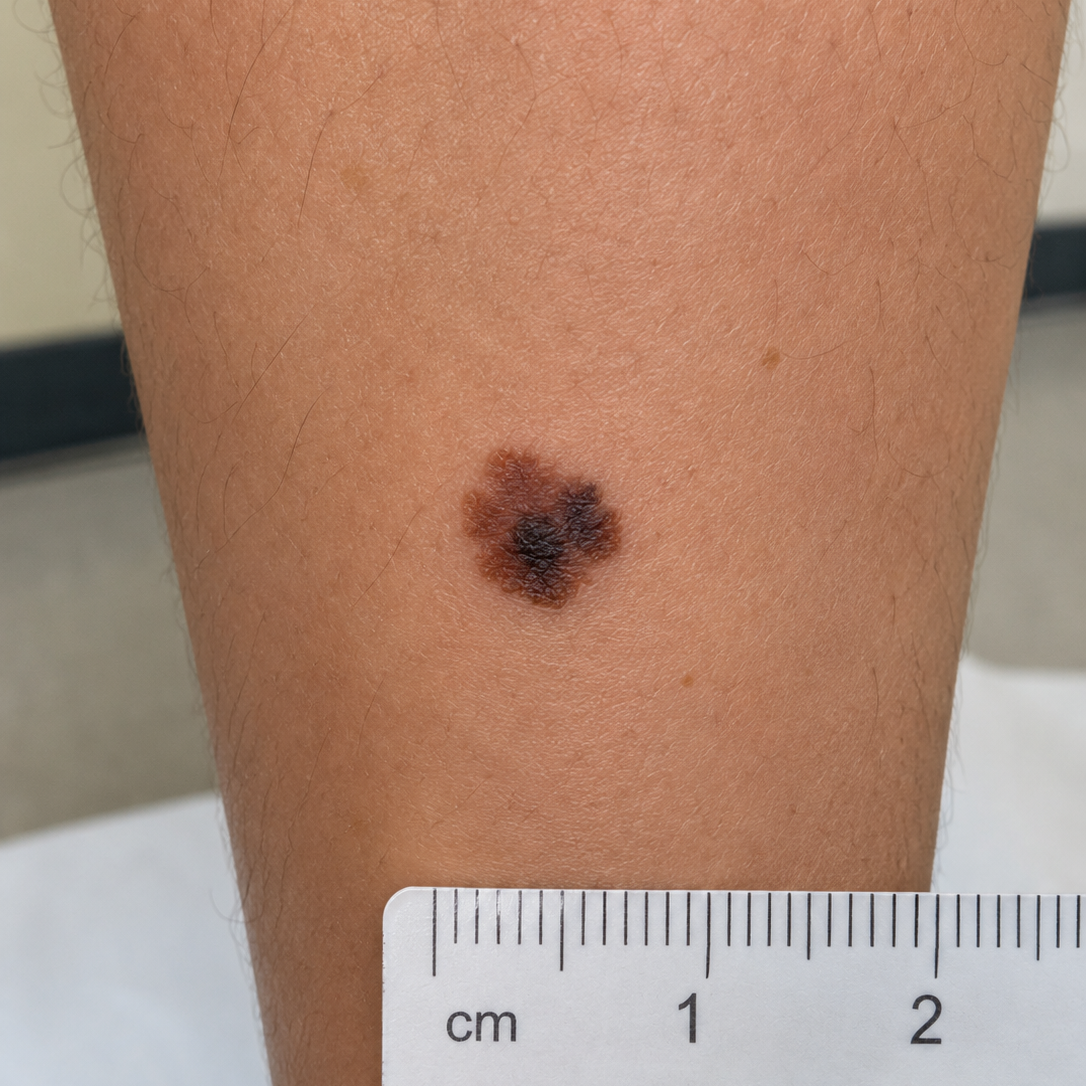
A Malignant Melanoma on the back of the leg
What actually happens during a skin cancer check
Many patients put off a skin check because they are not sure what it involves. It is more straightforward than most people expect.
During a skin cancer screening and mole check, I examine your skin systematically from scalp to feet in good lighting. For moles that need a closer look, I use a dermatoscope — a handheld magnifier with a light that lets me see structures beneath the surface that are invisible to the naked eye. This is what allows a specialist to distinguish a harmless mole from one that needs attention, and it is a key reason a professional check finds things a self-examination cannot.
If I see a lesion that is suspicious, the next step is usually a biopsy or excision, where the lesion is removed and sent for testing. Most of these are minor procedures done under local anesthetic in the rooms. Where appropriate, some early, superficial lesions can even be treated without surgery. The aim is always to be thorough without being alarmist — most spots I check turn out to be perfectly benign, and saying so with confidence is part of the value of the visit.
A practical routine for Cape Town patients
For most people in Cape Town and the surrounding suburbs, a sensible routine looks like this: examine your own skin once a month so you become familiar with your moles, protect your skin from the Cape sun every day, and have a professional skin check at the interval that matches your risk — yearly for most, more often if you fall into a higher-risk group.
If you are not sure how often you personally should be checked, that is exactly the kind of question a screening visit answers. Skin cancer is common here, but it is also one of the most treatable cancers we deal with when it is found early — and a few minutes of checking is a small investment for that reassurance.
Book a skin cancer check in Panorama
If it has been more than a year since your last skin check, or if you have a mole or spot you are unsure about, I would encourage you not to put it off. To book a skin cancer screening at Panorama Dermatology Clinic, call 021 911 5470 or WhatsApp 079 321 1973. As a specialist dermatologist I personally carry out every examination, so you can be confident your skin is being assessed by an experienced eye.
Dr Jean Louw is a specialist dermatologist with over 25 years' experience, practicing in Panorama, Cape Town.
